Development of Blood-Forming Tissues
During embryogenesis, hematopoiesis occurs in spatially and temporally distinct sites, including the extraembryonic yolk sac, the fetal liver, the thymus, and the preterm marrow.
The ontogeny of the hematopoietic system is now understood to consist of two broad programs.
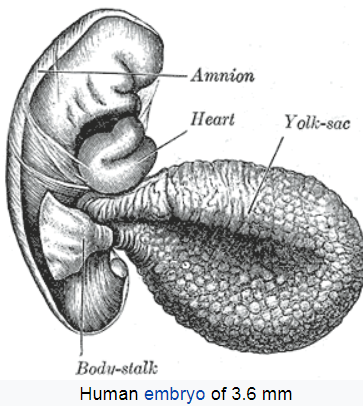
The first is a hematopoietic stem cell–independent program that emerges in the yolk sac and predominantly consists of “primitive” hematopoietic progenitors that generate the first (primitive) red cells and of multipotential definitive erythroid, megakaryocyte and myeloid progenitors that seed the fetal liver (Fig. 6–1).
Tissue-resident macrophage populations in multiple fetal and adult organs are derived from the yolk sac.
This initial hematopoietic stem cell–independent program is ultimately replaced by a hematopoietic stem cell–derived program. Hematopoietic stem cells arise from intraembryonic arterial blood vessels and seed the fetal liver and the preterm marrow to generate definitive erythroid, megakaryocyte, myeloid and lymphoid progeny (see Fig. 6–1).
The ontogeny of the hematopoietic system is complex and remains a topic of active research using mammalian and several nonmammalian model systems.
+++++++++++
Hematopoietic stem cells arise around the 16 day of gestation in a portion of the ventral mesoderm referred to as the aorta-gonad-mesonephros region and the yolk sac.

Transversal section of aorta, gonads, and mesonephros region (AGM) of embryos at E11.5. (A) AGM region stained with Hematoxilin & Eosin (H.E) (B) Combined image of Differential Interference Contrast (DIC) and fluorescence microscopy showing a MCcp (arrow) labeled with mAb BGD6-FITC located near the inner face of the dorsal aorta wall. Inset: Clusters of MCcps are occasionally seen in the AGM.
It is limited to the production of red cells.
Hematopoietic stem cells derived from this region and the yolk sac migrate through the blood and take up residence in the liver.
The aorta-gonad-mesonephros (AGM) region is a crucial area in the developing embryo, specifically during vertebrate embryogenesis. It is named after its three main components:
1. **Aorta**: The major artery that carries blood from the heart to the rest of the body.
2. **Gonads**: The organs that will develop into the testes or ovaries.
3. **Mesonephros**: A transient kidney structure that functions during early embryonic development.
The AGM region is especially important because it is a primary site for the emergence of hematopoietic stem cells (HSCs) during early development. HSCs are the precursor cells that will give rise to all the blood cells throughout an individual's life. These stem cells originate in the AGM region and later migrate to the fetal liver and, eventually, to the bone marrow, where they reside for the remainder of life.
The study of the AGM region provides valuable insights into the origins and regulation of blood stem cells, with implications for understanding blood diseases and developing stem cell therapies.